
Free will vs Predestination
Man’s Free Will vs God's Sovereignty and Predestination
The relationship of God’s sovereignty and man’s free will has caused more difficulty and division among believers than any other doctrine. However, this is not a salvation issue, nor a core gospel message. This situation is a difficult paradox, not a contradiction. Scripture declares that both are true at the same time. Yet some denominations have picked one side or the other and/or redefined words.
The Bible states that both are true. Rejecting or elevating one can cause problems:
1) God’s Predestination over Man's Free Will: Believers do not act, as everything is up to God. Self-examination not needed. Overemphasize God's Grace, downplay personal responsibility. Role of Holy Spirit in believer's life downplayed. Many also downplay the need for missionary and outreach programs.
2) Man's Free Will over God’s Predestination: Legalism possible: life is hard, not joy-filled; unhealthy fear and doubt; more focus on God's justice than God's mercy; focus on the letter of the law, not the spirit of the law; fear that outreach programs are all dependent on the believer.
Free Will: Jesus says, “Behold, I stand at the door and knock. If anyone hears My voice and opens the door, I will come in and fellowship with him, and he with Me” Rev 3:20 (also see John 3:16, Acts 3:19, Rom 10:9-13, Eph 2:8-9)
Predestination: “For he chose us in him before the creation of the world to be holy and blameless in his sight. In love.” Ephesians 1:4 (also see Mat 24:31, Luke 18:7, John 15:16, Acts 22:14, Rom 8:29-30, Eph 1:11,1 Thes 1:4)
The Bible teaches that God is sovereign and we have 100% free will and are accountable for our decisions. Both are true at the same time, even if we can’t visualize how. Ultimately, all things work out for good for believers. see Rom 8:28. God is both transcendent and immanent (in every part of and sustaining the universe).
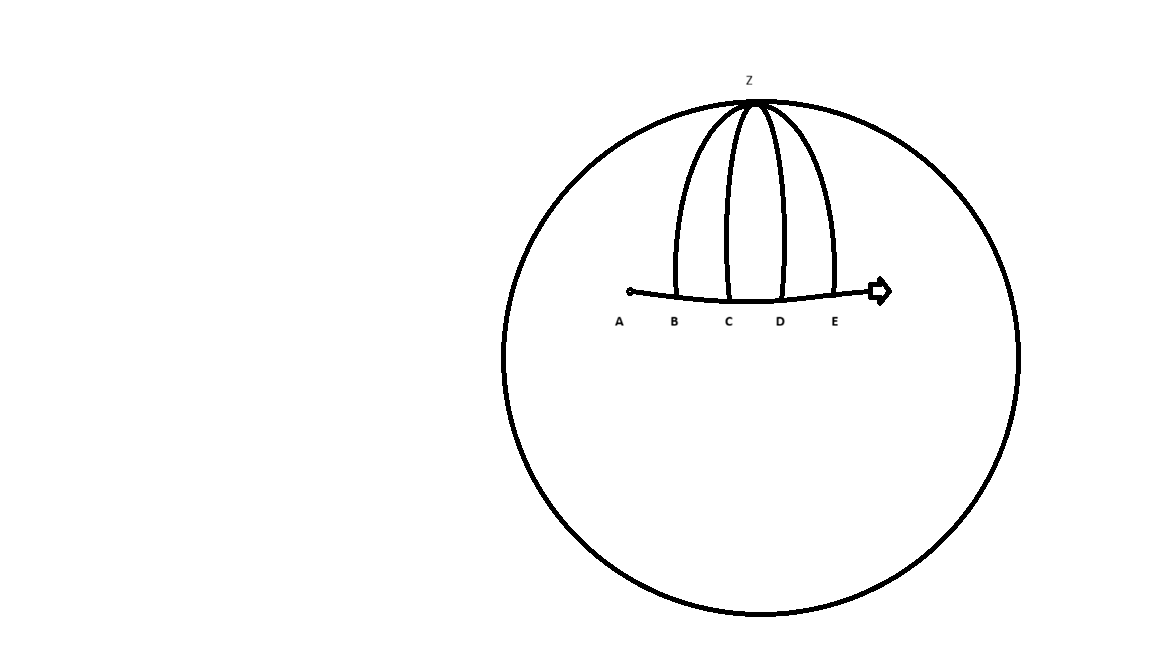
Ways to resolve this paradox: 1) God could manipulate the circumstances in our life to accomplish His goals, while maintaining our free will. 2) God could manipulate his will or “pull” in our life. His goals are met while we maintain our free will. 3) We can choose to move away from God or we can move towards God in our life (more of God's influence our life). 4) The Bible teaches that God has and operates in extra dimensions of time. With one extra time dimension, God can both be in 100% in control - (predestine earth's history) and give everyone 100% free will:
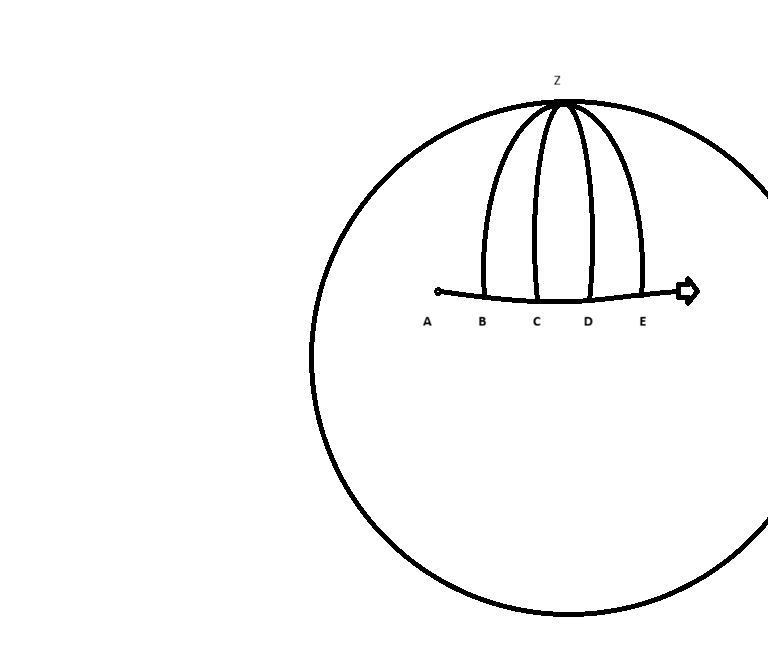
A to E is our timeline, always moving forward, linear.
Our timeline will end in the future (Matthew 24:35).
Z is one of God's extra timelines, without limits, not linear.
God can access (or be present at) any point of our timeline
at the same time.
Only the God of the Bible is described as having extra time
and space dimensions. (Titus 1:2, 2 Timothy 1:9)
(Luke 24:36-49, Jer. 23:24, Gen1:1, 1 Kings 8:27 )
(Psalm 139:8–12, Heb 11:3, John 4:24)
Where Denominations stand on the issue:
Predestination Denominations: John Calvin (1509 – 1564) Calvinism (Double Predestination) (Rejects Human Free Will)
Reformed traditions: Presbyterian (1706), Continental Reformed (1571), Reformed Church in America (1628)
Some Lutheran Churches (not all) (1530)
Calvinism Baptists (1638) - Primitive Baptist (1836) or Reformed Baptist (1638)
Free Will: Arminianism - “Foreknowledge” replaces “BIble Predestination and God’s sovereignty”, from Jacobus Arminius (1560–1609)
Methodist Church (1729) - Wesleyan; John Wesley (1703 – 1791)
Holiness movement churches (1860's departed Methodists)
Church of the Nazarene (1908 Wesleyan Holiness movement)
Free Will Baptists - Reformed Arminianism (Paul Palmer 1727 and Randall 1780)
Congregational Churches (Robert Browne 1580s, Pilgrims, Puritans, Congregational Denomination 1620)
Churches of Christ (1832 Barton Stone and Alexander Campbell)
Anabaptist (1525) and Quaker (1652): Mennonites (1536) and Amish (1693); Evangelical Friends (1947)
Fellowship of Evangelical Churches (1865, Amish roots)
Pentecostals (Started after the 1906 Azusa Street Revival in Los Angeles)
Calvary Chapels (Chuck Smith 1965) - Vineyard Church (Kenn Gulliksen 1974)
Some Episcopal Churches (1789)
Both are true (Free will and Predestination are both 100% true at the same time):
Roman Catholic Church (590)
Orthodox churches: Eastern Orthodox (Byzantine: Greek 1054, Russian 988) and Oriental Orthodox (Coptic 68, Armenian 301, Syrian 44, Ethiopian 333, Eritrean 1993, and India Malankara Church-Thomas Christians 52)
Most Anglican Churches (1534), most Episcopal Churches (1789), New Anglican Churches (1991&2009)
Evangelical Free Church of America (1950)
Pastoral Perspective (Many Nondenominational Bible Churches (1945, major growth starting 1960)
Messianic Jewish Fellowships – Messianic Synagogues (33)
Ref:
Presbyterian Church in America https://pcanet.org/
Andrew Penny, D. (1990). Freewill Or Predestination: The Battle Over Saving Grace in Mid-Tudor England. Woodbridge: The Boydell Press. p. 249. ISBN 0-86193-219-6.
Arand C. P., Nestingen J. A., Kolb R. (2012). The Lutheran Confessions: History and Theology of the Book of Concord. Minneapolis: Fortress Press. p. 296. ISBN 978-1-451-41059-4.
O'Banion, P. J. (2005). Jerome Zanchi, the Application of Theology, and the Rise of the English Practical Divinity Tradition // Renaissance and Reformation. Vol. 29. Toronto: Centre for Reformation and Renaissance Studies
Beeke, J. (2003). Theodore Beza's Supralapsarian Predestination: in 12 vol. // Reformation & Revival Journal. Vol. 12. Carol Stream: Reformation & Revival Ministries, Inc. pp. 69–84.
The Calvin Handbook / Selderhuis (ed.). Oxford: Oxford
god-and-nature.org Home Topics: Bible Faith Nature Biology History Cults World Religions News-N-Bible Links About
Founded 2026 - Facebook TBA and x.com @godandnature56
Why is there something? Why not nothing?